The Hidden Cost of Skipping Chemical Surface Treatment in Stainless Steel Industries (2026)
Skipping chemical surface treatment may seem like a cost-saving measure, but it often leads to expensive batch rejections, weld failures, and export non-compliance. This guide breaks down why pickling and passivation are essential investments to protect stainless steel’s integrity and a manufacturer’s long-term reputation.
Stainless steel is called ‘stainless’ for a reason. But that reputation isn’t self-sustaining. Behind every corrosion-free surface is a chemical treatment that made it possible. Skip that step, and you’re not saving money, you’re deferring a much larger loss.
Most manufacturers know this in theory. In practice, surface treatment often gets skipped, seen as an avoidable cost rather than a protective investment. This blog breaks down exactly what that decision costs: in material loss, rejection rates, compliance risks, and long-term reputation.
What Happens to Stainless Steel Without Surface Treatment?
Stainless steel does have a natural defence. It forms a thin chromium-oxide passive layer that resists corrosion. But fabrication breaks that layer.
Welding, grinding, cutting, and contact with carbon steel tools all of these introduce contaminants and destroy the passive film. What you’re left with is a piece that looks like stainless steel but is no longer behaving like one.
Furthermore, pickling and passivation are both essential chemical treatments to remove contaminants and restore the chromium-oxide passive film after fabrication. Skipping them leaves the surface vulnerable, especially at weld zones and areas with embedded iron contamination.
The consequences aren’t always immediately visible. That’s the trap.
The Real Costs: Breaking Them Down
Corrosion Damage and Direct Material Loss
India loses over ₹12 lakh crore every year to corrosion-related damage. This is nearly 4.2% of GDP according to industry data from the CII Surface and Coating Expo 2025. Globally, NACE International estimates corrosion costs at USD 2.5 trillion annually which is around 3.4% of global GDP.
For India specifically, Jindal Stainless reports that the country loses approximately USD 100 billion to corrosion annually and that strategic corrosion management could recover up to 25% of that figure.
Chemical surface treatment is not a luxury line item. It is the most cost-effective intervention in your production chain.
Batch Rejections and Rework
Field failures in stainless steel fabrication are overwhelmingly caused by preventable contamination during production not by the alloy itself. Studies have shown post-fabrication failure patterns extensively.
When a batch fails inspection, you don’t just lose materials. You lose:
- Production time for rework
- Labour and chemical costs for corrective treatment
- Delivery timelines which directly affects client trust
- In worst cases, full batch rejection and remanufacture
The cost of cleaning is small compared to capital expenditure on equipment and far smaller compared to the ongoing operational cost of not cleaning.
Weld Zone Failures
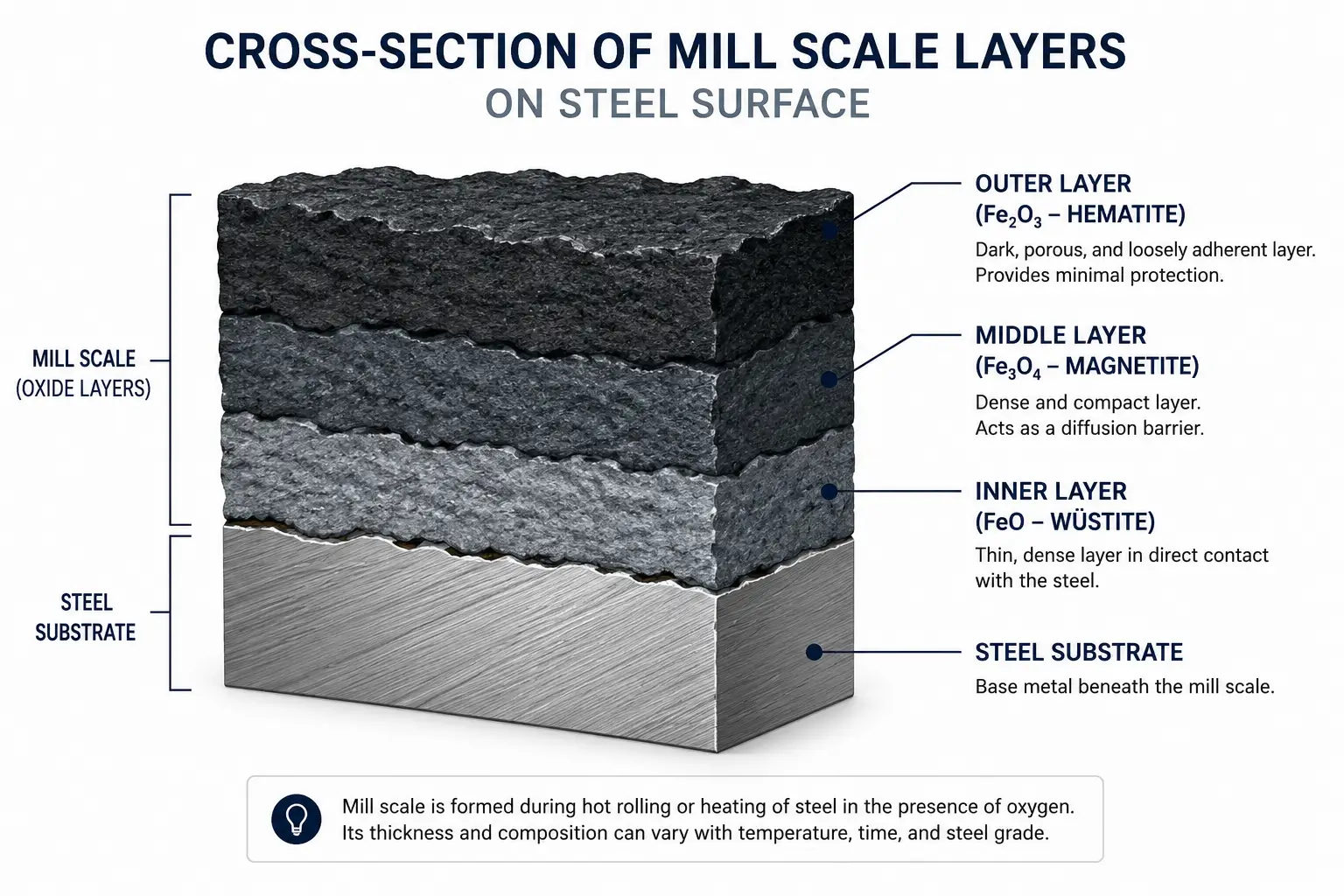
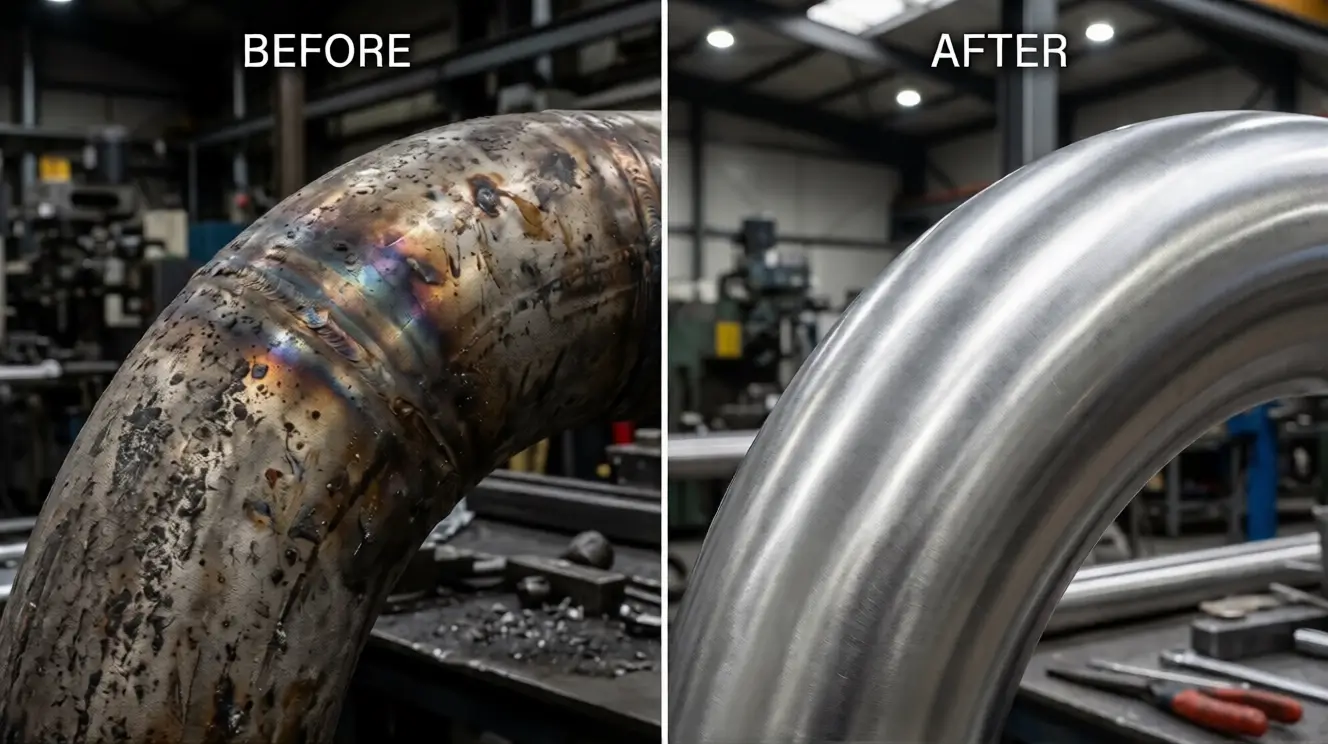
Welding is the most damaging process for the passive layer. It creates heat and a thicker-than-normal oxide film that ranges from light brown to black and leaves a chromium-depleted zone beneath it.
Mechanical descaling only treats the immediate weld zone. Iron-rich grinding dust settles across the entire surface during fabrication. Only full chemical pickling reliably removes these widespread microscopic contaminants and restores corrosion resistance uniformly.
Skipping pickling after welding isn’t just a quality shortcut. It’s a structural risk that compounds over the product’s service life.
Compliance and Export Market Risk
Indian steel manufacturers are growing their export footprint, particularly across Europe, the Middle East, and the US. These markets carry strict standards around surface finish, passivation levels, and contamination thresholds.
Non-compliant shipments can result in:
- Rejection at port with return freight borne by the exporter
- Penalty clauses triggered under supply contracts
- Delisting from approved vendor programs
A single rejected consignment can eliminate the margin savings you thought you made by skipping treatment.
Reputation and Long-Term Client Loss
Corrosion failures in the field don’t just hurt a single order. They damage your brand. In B2B steel supply chains, repeat business depends on consistent quality. A client who receives corroding stainless steel products — even once — will begin qualifying alternatives.
The cost of losing a long-term client never appears in a single invoice. It compounds over years of lost revenue.
With Treatment vs. Without: A Cost Perspective
| Cost Factor | With Chemical Treatment | Without Chemical Treatment | Risk Level |
|---|---|---|---|
| Corrosion resistance | Fully restored | Compromised at weld zones | High |
| Batch rejection rate | Low | Elevated | High |
| Rework cost | Minimal | Significant | Medium-High |
| Export compliance | Meets standards | Likely non-compliant | High |
| Long-term asset life | Extended | Shortened | Medium |
| Client retention | Strong | At risk | High |
What the Right Treatment Looks Like?
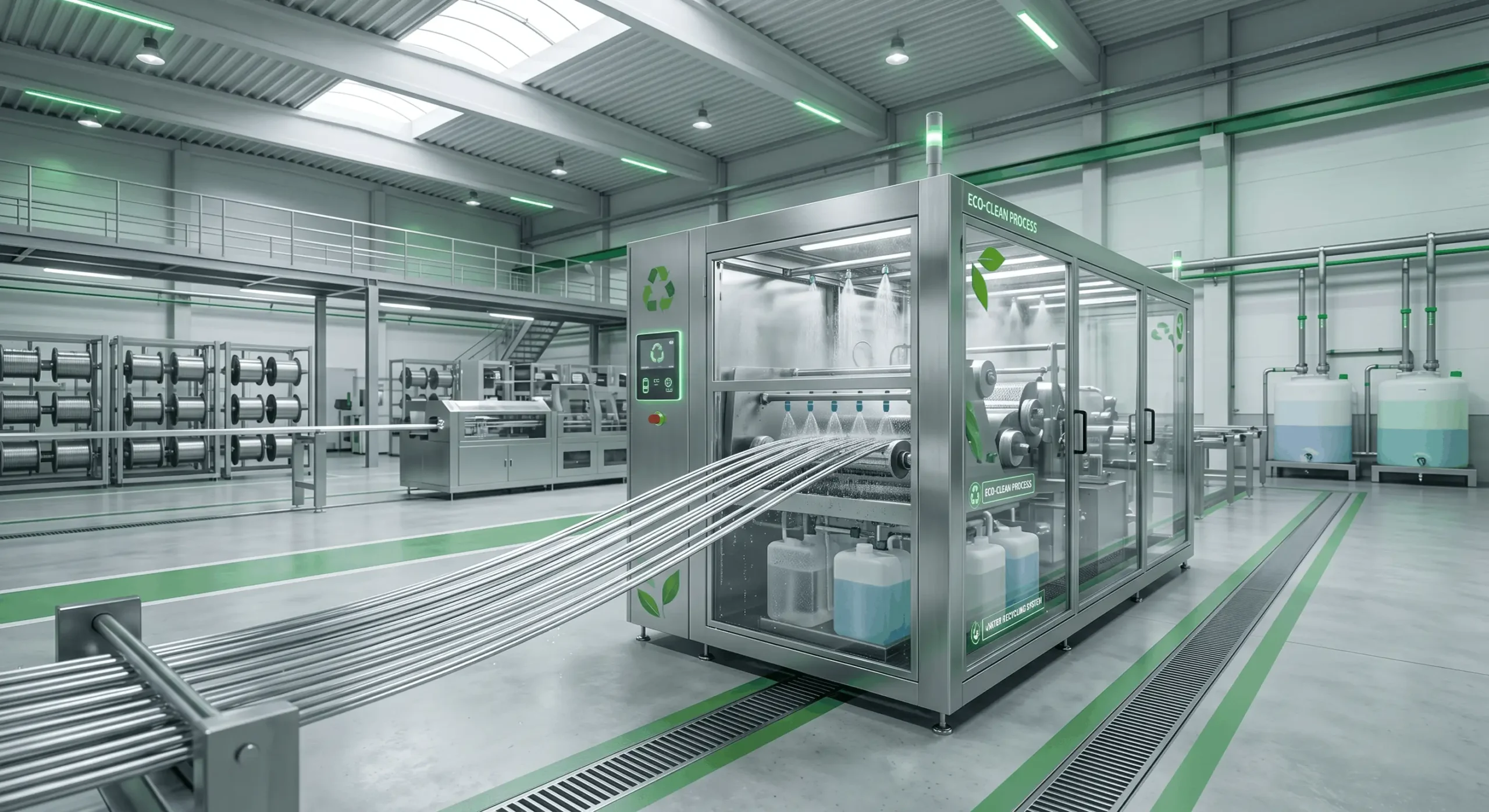
Chemical surface treatment typically involves three sequential stages:
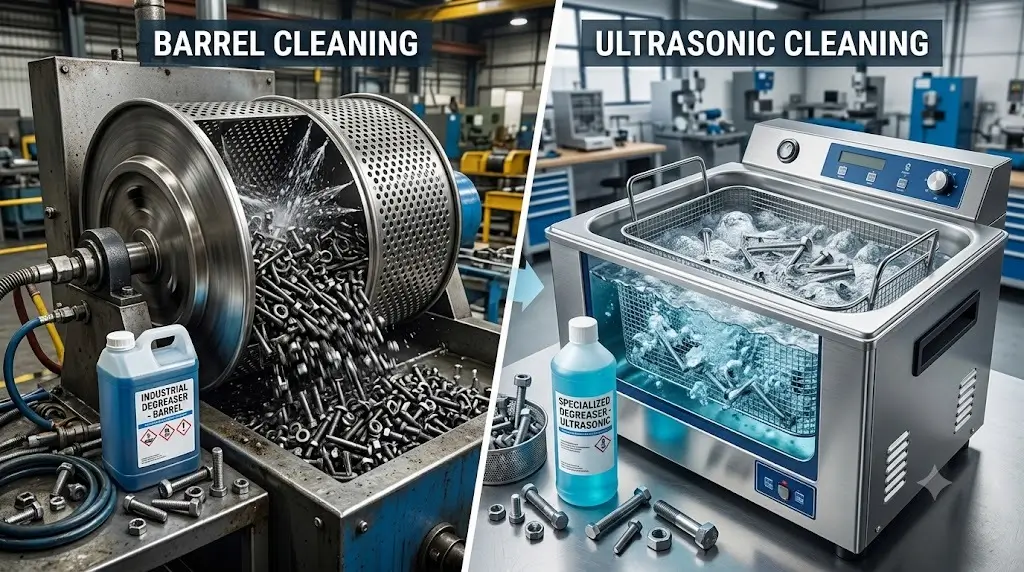
- Degreasing / alkaline cleaning: Removes oil, grease, and loose particles before acid treatment begins.
- Pickling: An acid treatment that removes heat tint, embedded iron, and the chromium-depleted layer beneath welds. This is the critical corrective step.
- Passivation: Chemically enhances the chromium-oxide passive film, maximising the steel’s corrosion resistance.
Each step is load-bearing. Passivation alone won’t remove embedded iron contamination. Pickling without proper rinsing leaves residual acid that attacks the newly exposed surface. The sequence and the chemistry both matter.
Elite AquaChem’s product range covers this full cycle. From pickling chemicals and passivation solutions to dulling chemicals for controlled surface finish applications. Every formulation is developed specifically for Indian steel industry conditions.
Why This Matters More in 2026?
India’s steel industry is scaling rapidly. According to IBEF, production capacity reached 200 MT in FY25 and is projected to hit 300 MT by FY30. The government’s PLI scheme for specialty steel is pushing manufacturers toward higher-end, value-added products — products that face higher scrutiny at every stage.
A ₹50 surface treatment chemical cost per unit is not a cost centre when the finished product commands a 10x premium in export markets.
India’s National Mission on War Against Corrosion — backed by the Ministry of Steel and bodies like CII and Jindal Stainless — is also putting corrosion management at the centre of industrial policy. Manufacturers who build best practices now will be ahead of the compliance curve when it tightens.
The Bottom Line
Skipping chemical surface treatment is not a cost-saving decision. It is a cost-transfer decision. The money saved at the production stage shows up later — as rework, as rejected batches, as corroded product in the field, or as clients you no longer hear from.
Every stainless steel manufacturer understands quality. The ones who lead their markets have built it into every process step — including surface treatment.
To evaluate your current surface treatment process or explore speciality chemicals matched to Indian industrial applications, contact the Elite AquaChem team today!
Nilesh Kothari
Founder, Elite AquaChem | 25+ Years in Specialty Metal Treatment Chemicals | Helping Steel Wire, Tube & Fastener Manufacturers Achieve Export-Ready Surface Finishing | ISO 9001:2015 Certified
Recent Post