- Blog
How to Clean Fastener Manufacturing Equipment?
- Nilesh Kothari
A new cold header is a serious investment. From the first coil, it also starts collecting oil, metal fines and wire coating residue. Clean it on a schedule and it holds its tolerances. Ignore it and you own a very expensive sludge collector.
The short answer: clean fastener manufacturing equipment by matching every job to the soil each machine collects. Forming machines gather oil and fines. Washers gather tramp oil. Cooling circuits gather water scales. Treatment tanks gather sludge. Each soil needs its own chemistry and its own frequency, and this guide covers all four.
Why Cleaning Is a Production Decision, Not a Housekeeping Chore
Dirty equipment rarely fails in one dramatic moment. It fails slowly, then all at once.
- Downtime is expensive: Siemens’ True Cost of Downtime 2024 report found that large plants lose an average of 27 hours a month to unplanned stoppages.
- Scale steals energy: US Department of Energy data for boilers shows that 1/32 inch (0.8 mm) of normal scale wastes about 2% of fuel. Iron-rich scale of the same thickness wastes 3.1%.
- Contaminated quench oil hurts parts: Carbon, oxidation by-products, dirt and water shorten oil life, shift the quench curve and leave sludge behind, according to research presented at ASM’s 2019 Heat Treat conference.
Every one of those losses starts as residue someone planned to clean next week.
What Fastener Teams Actually Search For?
We reviewed three months of our Google Search Console data (July to October 2026) for the queries that brought fastener and wire engineers to our site. The phrases were specific and practical: “chemical for fasteners”, “barrel of degreaser”, “offline degreasing line suppliers” and even “what are the main contamination risks with batch immersion and how are they managed?”
What we concluded so far was that teams search for a chemical after something breaks. Very few search for a cleaning schedule, which is the thing that prevents the breakdown. This guide closes that gap.
The Complete Fastener Manufacturing Equipment Cleaning Guide
Pickling and Phosphating Tanks
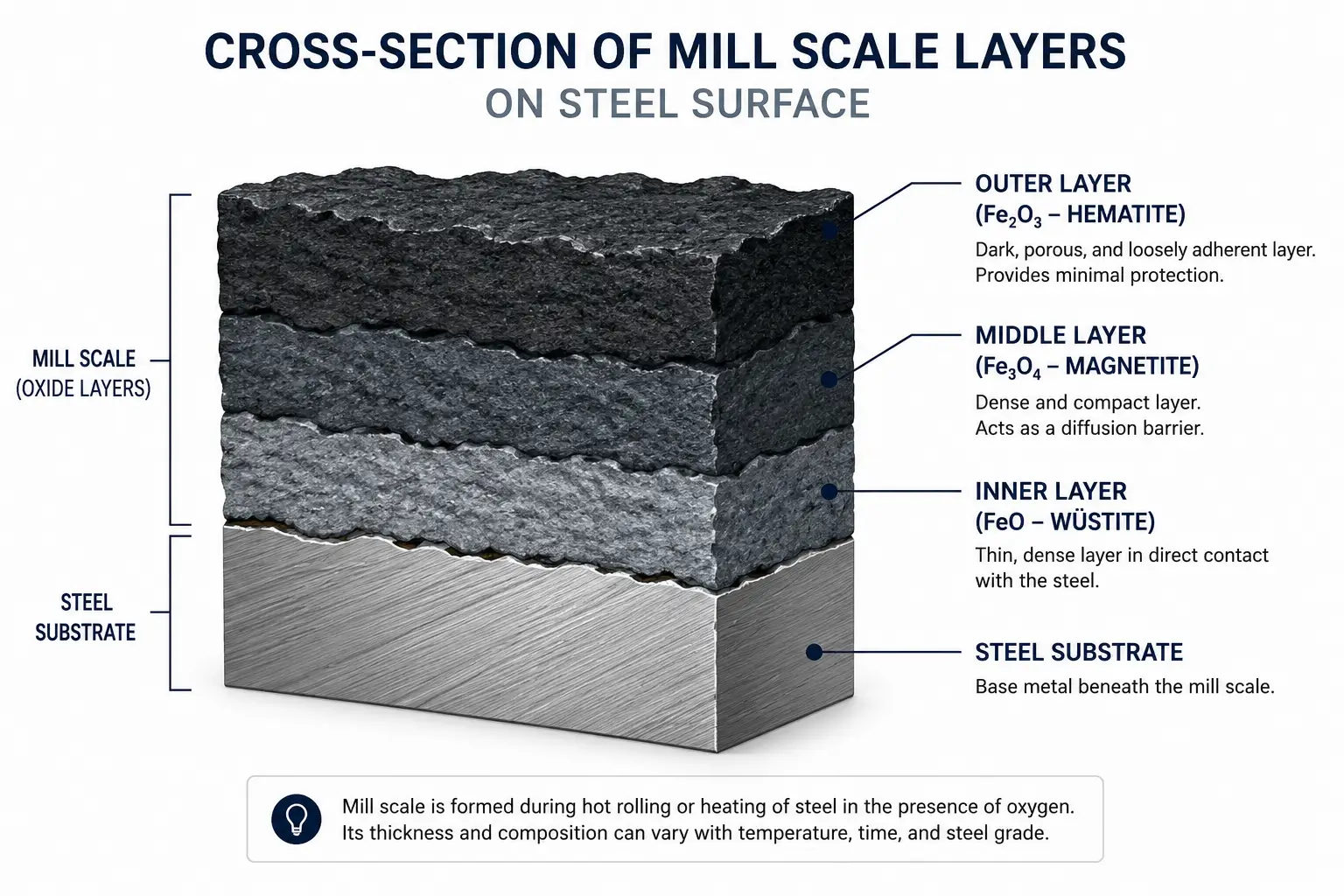
Sludge settles at the bottom at the same time the scale coats the heating coils. This then burns more energy to hold the same bath temperature. Desludge on a fixed calendar/schedule instead of waiting for a coating defect to remind you.
When you descale coils and tank walls with acid, keep an inhibitor at 0.1 to 0.3% of bath volume so the acid attacks the scale and doesn’t harm the steel. Log every desludge, so you can see how fast the sludge returns.
Cold Headers and Formers
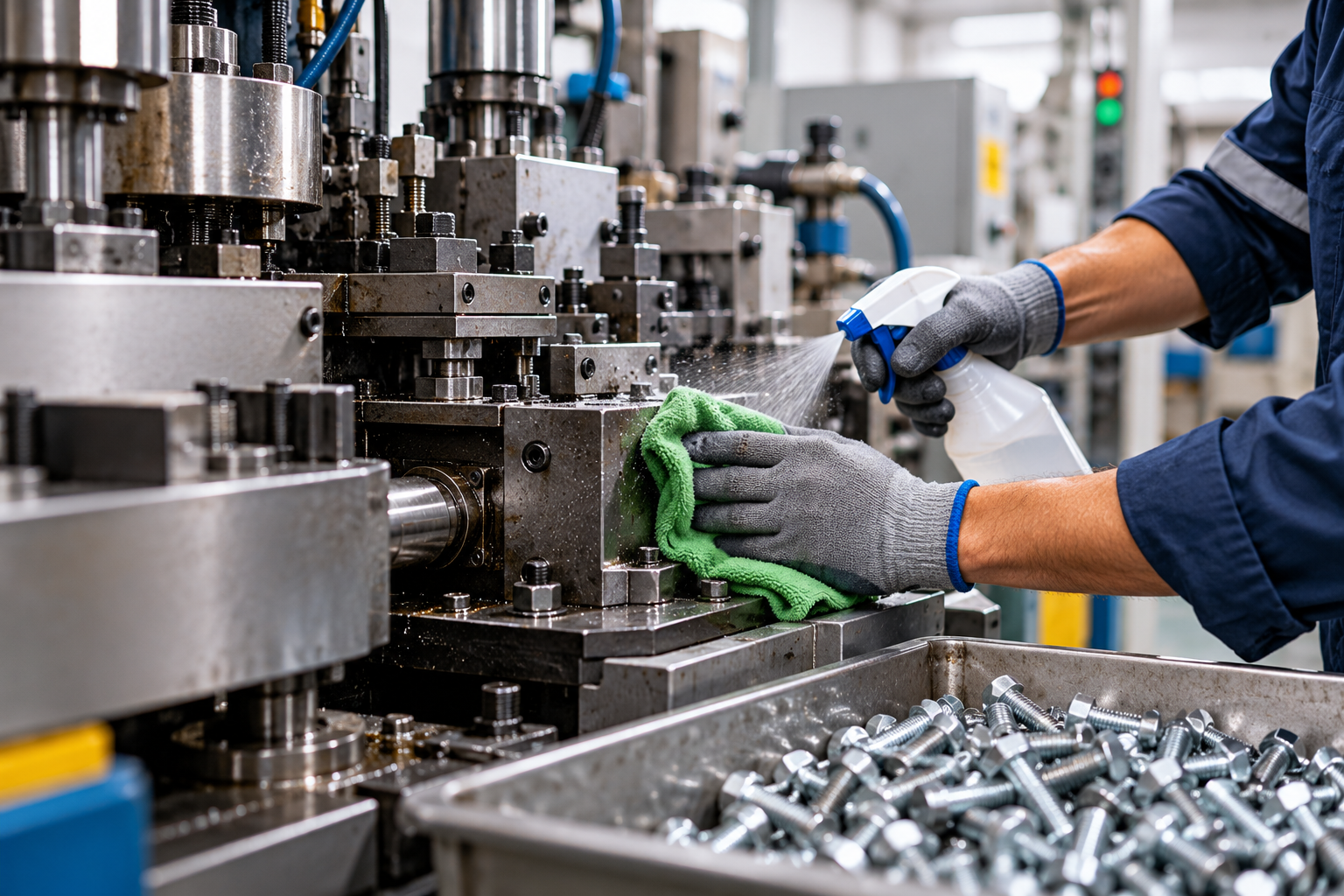
Header oil picks up metal fines plus the phosphate and soap coating that comes off the wire. That mix wears dies, clogs filters and coats the bed.
- Wipe the die and transfer area every shift.
- Check sump magnets and filters every week.
- At every oil change, flush the sump, and degrease the bed with a low-foam alkaline cleaner, so the fresh oil does not come with the old dirt.
Test any cleaner on a hidden patch first to confirm it is safe for your seals and paint.
Thread Rolling Machines
Fines trapped on dies and slides show up later as poor thread finish and rejected lots. Clean the dies at every changeover and inspect them under good light before they go back in. Keep the lubricant filtered, because a rolling die cannot tell a blank from a chip.
The Pre-Heat-Treatment Washer
This is the machine everyone uses and nobody owns. Inorganic residues burn onto parts and block carbon diffusion, while cleaner left on the surface can cause caustic burn or rust. Tramp oil is the main enemy. One nut manufacturer recovers about 30 gallons (around 114 litres) of it from its washwater every week.
- Skim floating oil daily and titrate the bath weekly.
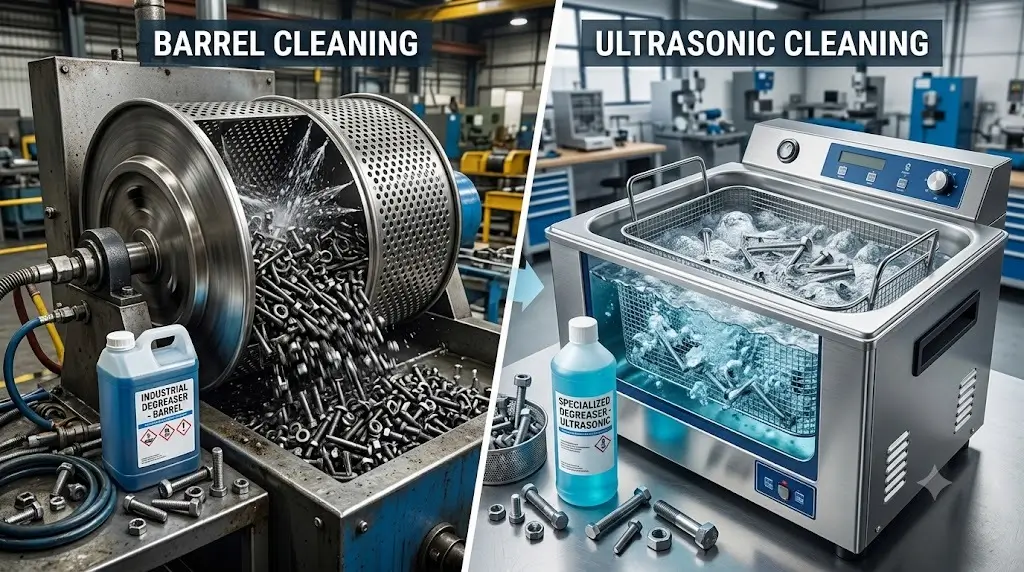
- Run alkaline degreasers within their working window. For barrel lines, 60 to 80 °C is common.
- Dump the rinse tank on a fixed schedule so it never redeposits soil.
- Use the water-break test: clean steel holds an unbroken film of water.
Running ultrasonic tanks as well? Foam behaves very differently there, as our guide to barrel vs ultrasonic degreasing explains.
Hardening Furnace and Quench Tank
Filter quench oil continuously and send samples for analysis regularly, because trends tell you more than a single result. The post-quench rinse tank needs attention too. We had a situation from one of our fastener supplier clients. What happened was that the rope skimmers removed only about 50% of the tramp oil from its rinse water, while a tramp oil separator removed about 98% in a single pass.
Cooling Circuits and Heat Exchangers
Furnace jackets, quench oil coolers, compressors, and hydraulic coolers all depend on water, and water leaves scale. Track the temperature rise across each exchanger. When it starts creeping up, schedule a descale during planned maintenance, then flush until the rinse water tests neutral. Thin scale comes off faster and with milder chemistry than thick scale.
Four Mistakes That Quietly Raise Your Cleaning Bill
- One cleaner for every machine: A degreaser that works on a header bed does nothing for water scale, and a scale remover has no business near painted guards.
- Solvent wipe-downs as a habit: They are fast, flammable and harsh on seals, and they move oil around more than they remove it.
- No owner and no log: A task without a name and a date beside it does not happen.
- Cleaning to look clean: A shiny bed with a clogged filter behind it is still a dirty machine.
Put the Checklist on Your Floor
We have turned this guide into a one-page Fastener Plant Cleaning Checklist with shift, weekly, monthly and quarterly tasks for every machine. Download it, print it and assign each line an owner.
Not sure which chemistry suits a machine? Send our team a photo of the residue on WhatsApp. We will tell you whether you need a degreaser, a descaler or an inhibitor, and set up a trial on your own line.
Nilesh Kothari
Founder, Elite AquaChem | 25+ Years in Specialty Metal Treatment Chemicals | Helping Steel Wire, Tube & Fastener Manufacturers Achieve Export-Ready Surface Finishing | ISO 9001:2015 Certified
Recent Post