- Blog
How to Remove Heat Tint from Stainless Steel Tube Welds?
- Nilesh Kothari
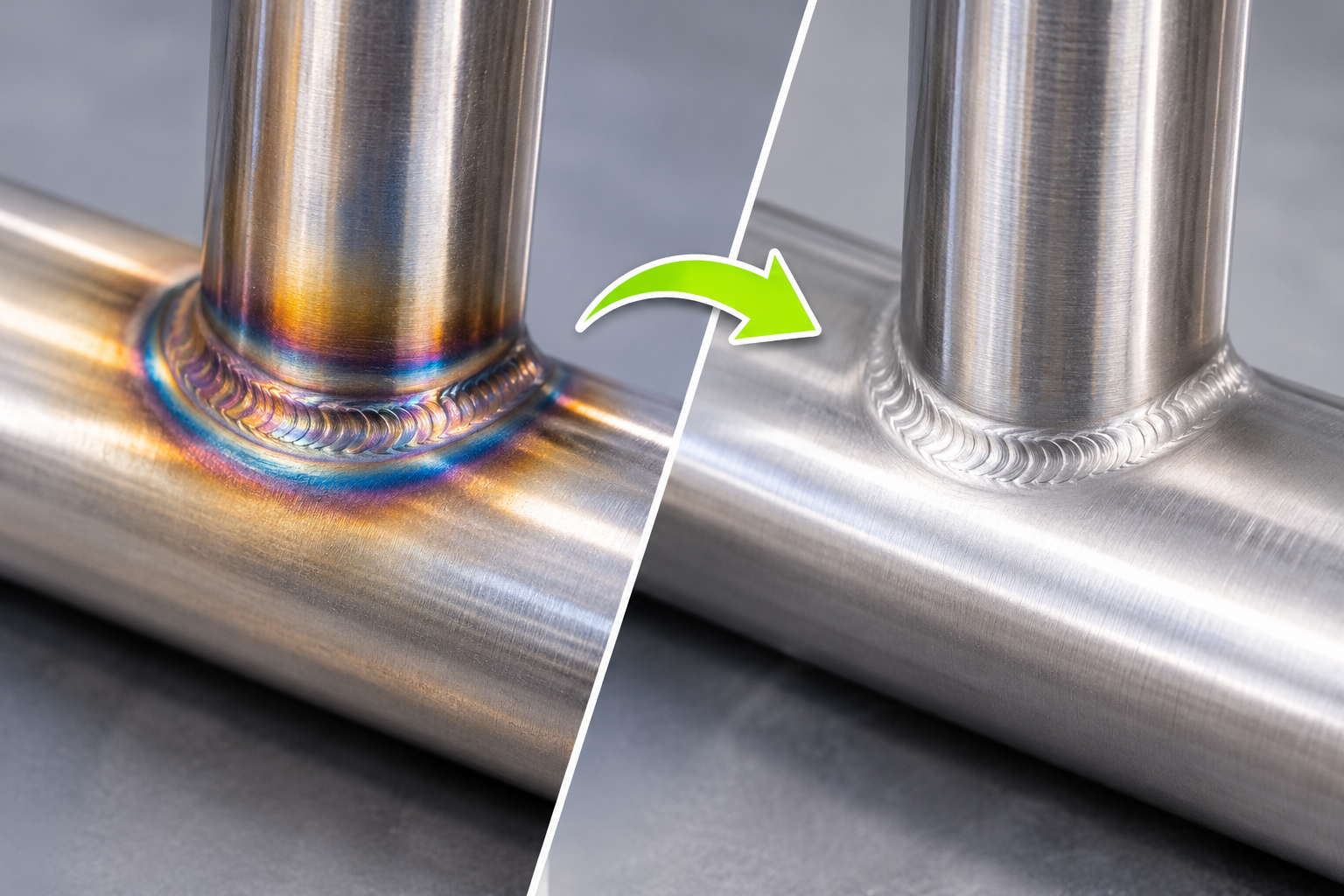
That blue and gold rainbow beside a tube weld looks harmless. It is actually a signed confession that the steel gave up some of its corrosion resistance while you were welding it.
The short answer: weld heat tint removal on stainless steel means taking off two layers, the coloured oxide and the chromium-depleted metal beneath it. Pickling removes both. Mechanical cleaning alone usually removes only the first, so the tube looks clean and still corrodes early.
What Heat Tint Is, and Why the Colour Is the Smaller Problem?
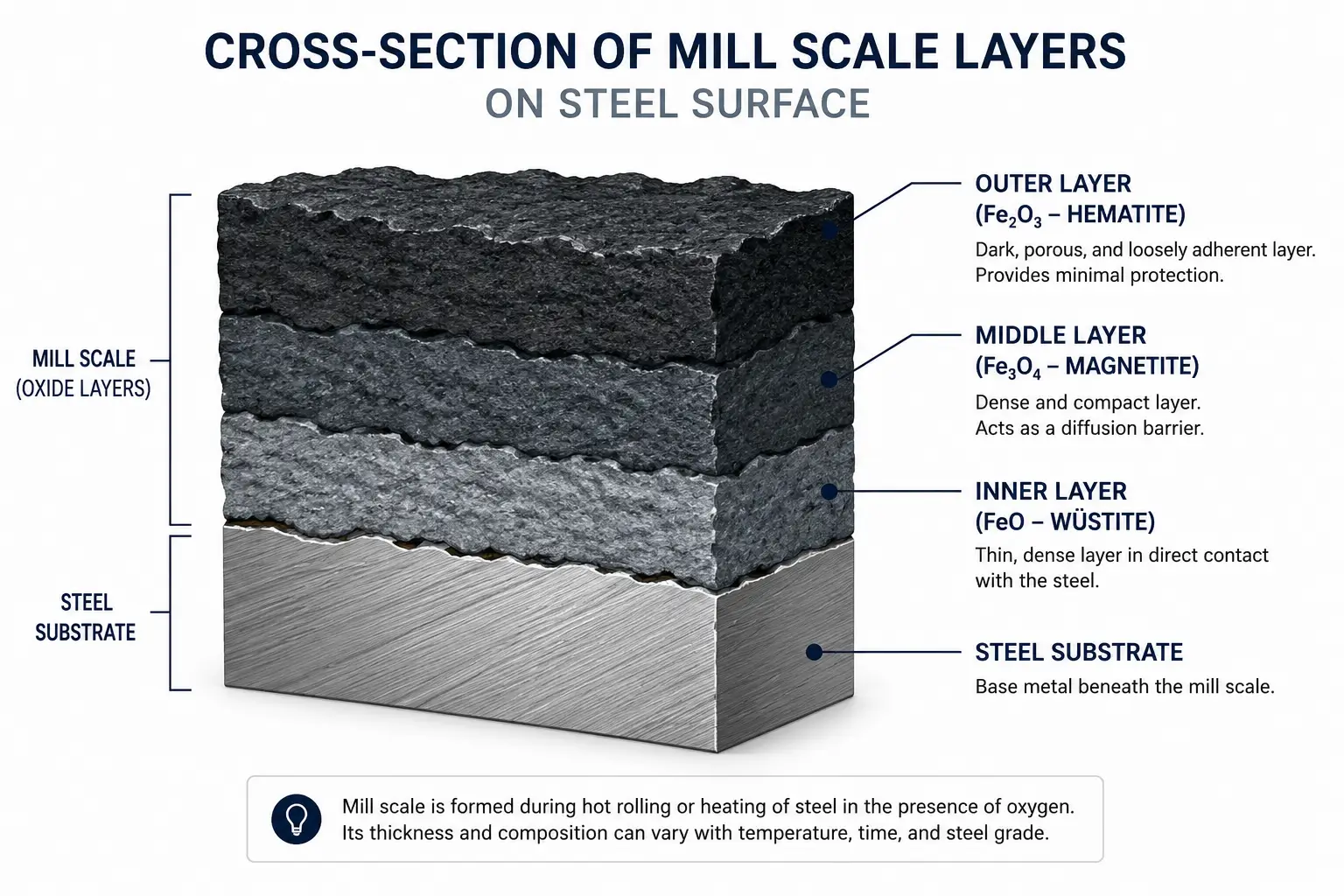
Heat tint is an oxide film that grows when hot stainless steel meets oxygen. Its colour tracks its thickness, according to Heat Treat Today:
- It first becomes visible as light straw at around 20 to 30 nm.
- It moves through gold, bronze and peacock blue to grey as it thickens.
- Above 100 nm it turns dark grey to black, reaching roughly 850 nm.
The real damage sits underneath. As the oxide grows, chromium diffuses out of the metal next to the weld and leaves a thin layer short of the element that makes stainless steel stainless. A study summarised by ISPE counted 10 to 50 times more pits in the heat-affected zone than on the weld bead. The trouble starts beside the weld, not on it.
What Tube Makers Ask Us?
We reviewed three months of our Google Search Console data (July to October 2026). Tube and pipe buyers reached our site with searches like “hf+hno3”, “no hf”, “passivation gel for stainless steel”, “ss pipe cleaning liquid” and “how to remove scale on stainless steel seamless pipe”.
Two questions stand out. Do I really need hydrofluoric acid, and how do I clean the inside of a tube? The methods below answer both.
Where Heat Tint Hides on a Tube?
Inspect four spots before you pick a method:
- The outside weld cap and the band of heat-affected metal on either side of it.
- The root on the inside, which nobody sees without a borescope.
- Tack welds that were never purged properly.
- Fittings and end connections welded after the main run.
Four Ways to Remove Heat Tint, Ranked by What They Restore
Grinding, Brushing and Blasting
Mechanical cleaning is quick for tint on the outside of a tube. TWI recommends grinding with 360 grit or finer and notes that wire brushing and blasting generally leave the chromium-depleted layer in place. ESAB’s technical column rates grinding about three times more effective than wire brushing for pitting resistance. Use stainless-only brushes and discs, because a carbon steel brush plants iron particles that rust later.
Pickling Paste or Gel
Paste suits local welds on the outside diameter, assembled spools and site work. Gel clings better on vertical runs. Brush it onto a cool surface, leave it for the dwell time on the supplier’s data sheet, then rinse until no residue remains. Hot steel makes the paste release nitrous fumes, so let the joint cool first.
Immersion or Circulation Pickling
This is the method built for tubes, because it is the only one that reliably reaches the bore. Dip whole tubes in a pickling bath or pump the solution through them. A typical mixed acid bath runs 10 to 15% nitric acid with 0.5 to 3% hydrofluoric acid, according to TWI. Dark grey or black tint responds faster when an alkaline descaling step comes first. With our descaling chemicals, the working window is 6 to 10% concentration at 70 to 80 °C for 10 to 15 minutes, which softens the oxide so the acid needs less time.
An inhibitor such as our SI 400 (H) for HF and nitric baths limits base metal loss. Our Aquaclean 160 and 165 are formulated to remove scale, rust and weld heat tint on dip and continuous lines. Log acid strength, dissolved metal, temperature and time for every batch, so good results become repeatable results.
Electrochemical Cleaning
A handheld wand passes current through a phosphoric-based electrolyte and cleans the weld without hydrofluoric acid. The UK Health and Safety Executive names it as the main chemical alternative to HF pastes. It leaves a bright finish on visible welds, finished goods and hygienic tubing, but it is slow on long seams and cannot travel down a bore.
How to Confirm the Tint Is Really Gone?
A clean look is a good start, not a pass certificate.
- Check colour against your acceptance chart: Hygienic tubing usually follows the ASME BPE discoloration charts.
- Test for free iron: ASTM A967 includes the ferroxyl and copper sulphate tests, which reveal iron left behind by tools or fixtures.
- Check the final rinse: Neutral pH and no residue on the surface mean the acid has left with the water.
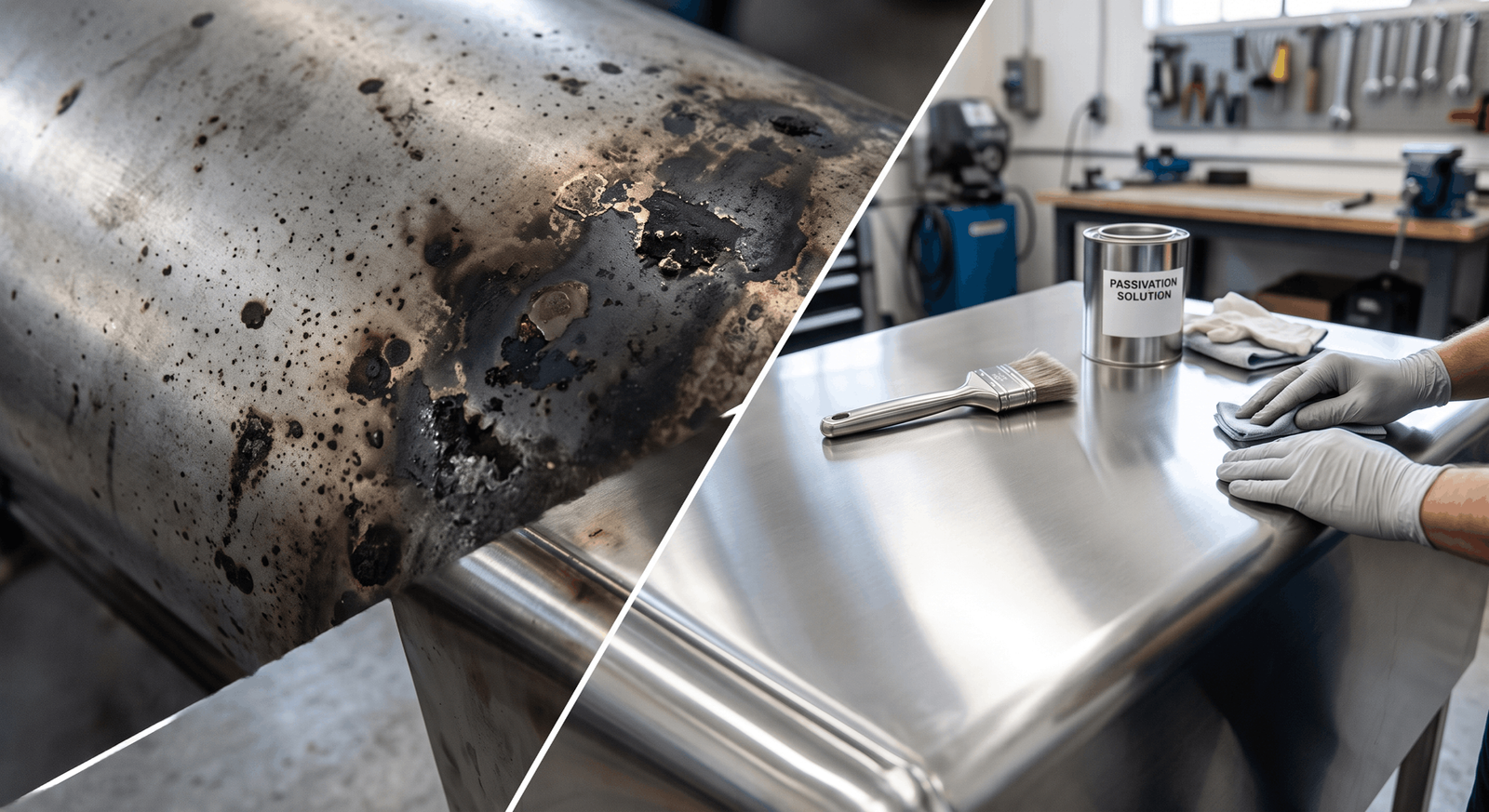
- Passivate if your specification calls for it: Pickling restores the surface, and passivation helps the protective film rebuild evenly.
Stop the Tint Before It Forms
The cheapest heat tint is the one you never make. Purge the tube bore with argon and measure oxygen with an analyser instead of guessing. An ISPE-reported study found that welds made near 50 ppm oxygen matched AWS D18.2 colour level 3. Keep heat input low and clean oil and marker ink off the joint before the arc strikes.
Safety Is Part of the Process
Hydrofluoric acid burns can feel painless for hours while the damage continues, the HSE warns. Keep calcium gluconate gel on site and in date, since it has a two-year shelf life. Wear a full-face shield, neoprene gloves and acid-resistant clothing. Use local exhaust ventilation, and neutralise acidic rinse water before it reaches a drain.
Get the Cheat Sheet, Then Get a Second Opinion
Download our one-page Weld Heat Tint Removal Cheat Sheet. It puts the colour scale, the method selector and a pickling checklist on a single sheet for your shop floor.
Not sure which route suits your line? WhatsApp us a photo of the weld. We will recommend the chemistry and arrange a trial on your own tubes.
Nilesh Kothari
Founder, Elite AquaChem | 25+ Years in Specialty Metal Treatment Chemicals | Helping Steel Wire, Tube & Fastener Manufacturers Achieve Export-Ready Surface Finishing | ISO 9001:2015 Certified
Recent Post